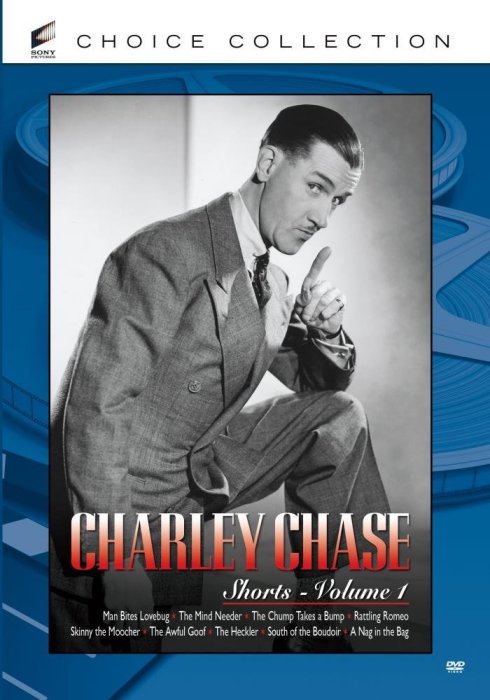
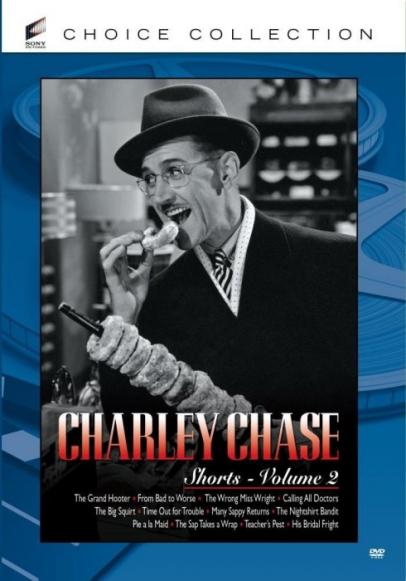
(1937-1940)
~by Eric Schultz
This article was originally written by Eric Schultz and published by Roger Robinson @ The Perry Winkle magazine.

|
THE 20 CHARLEY CHASE SHORTS @ COLUMBIA (1937-1940) ~by Eric Schultz This article was originally written by Eric Schultz and published by Roger Robinson @ The Perry Winkle magazine. |
|
| The DVDs are available on Amazon: Vol. 1 Vol. 2 Charley Chase Menu †Note: The views contained within this page are that of the author and do not necessarily represent those of the webmaster. |
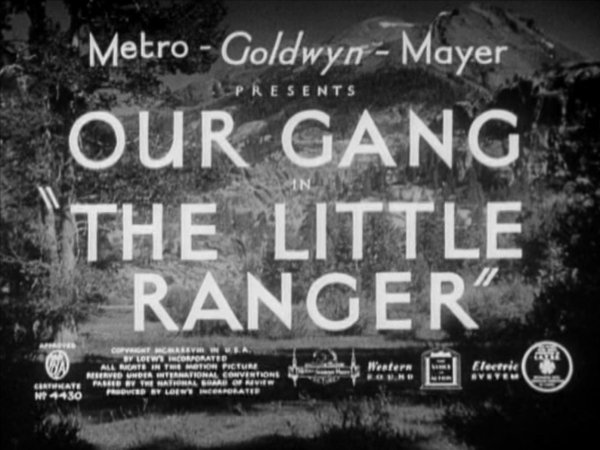 |
170. THE LITTLE RANGER (August 06, 1938) [10:43] Charley Chase’s Last Films- By Eric Schultz 2013 saw the first official DVD releases of all twenty of the short films that Charley Chase starred in at Columbia Studios. These films represent the very last phase of his career. His long association with Hal Roach ended in 1936. Soon after that, Chase signed with Columbia, which had a large department for the production of two-reel shorts. This consisted of two separate units operating at once, and they wanted to have talented people like Chase. Not only was he a great comedian, but he known to be an experienced writer and director of comedies as well, so Columbia was glad to have him join their studio. From 1937 to 1940, Chase not only starred in a series of shorts, but he directed other comedians, as well, such as The Three Stooges, Andy Clyde, the team of Smith & Dale and others. If Chase hadn’t died suddenly in 1940 (a few weeks short of what would have been his 47th birthday), it is certain that he would have continued to work at Columbia. A new three-year contract had already been drawn up for him, but, unfortunately, this was not to be. Chase died before signing it. As it turned out, these Columbia shorts were his very last work in film. For decades, these films were not generally available. Finally, the 20 shorts starring Chase became available on two DVDs, which were released in January and November, 2013. These films show us Chase working under new and different conditions. Gone were the days of extended story conferences, last-minute changes in the script, and shooting new scenes to improve a film after preview showings. At Columbia, everything was tightly run on strict schedules, with very limited time allotted for writing and shooting each film. Each two-reel short was required to be shot in only four days. Although Columbia’s emphasis was on comedies which were generally faster, rougher and louder than what was done at the Roach studios, this was familiar ground. Chase had started his film career back in 1914 at Mack Sennett’s Keystone studios, where they made some of the most frantic and slapstick-filled comedy shorts ever produced, so he was no stranger to that type of madness. Columbia could even be considered tame in comparison with Keystone. If anything, this new rough house style was a throwback to the old days with Sennett. In most of his Columbia films, Chase continued to play the same type of character that he normally played during his years at Roach: a regular kind of guy who keeps getting into embarrassing situations which are hard to explain to others around him. He continued to be a great comic performer in these last films. One thing I couldn’t help but notice was the many times that he expressed frustration and exasperation in a way that reminded me of another famous film comedian. In his 1978 book, The Great Movie Comedians, Leonard Maltin quotes Billy Gilbert about Chase: “I remember one theory he had- he said that all comedians should pick another comedian whom they admired, one who was as different physically as possible from themselves and play each scene as they thought he would play it. His model was ‘Ham’ (Lloyd) Hamilton. He said that when other people saw the end results they could see no resemblance, that he couldn’t even see it himself because it came out different. But when he played a scene he always thought, ‘ How would “Ham” play this?’ “ I really don’t know how far Chase went with this “what would Lloyd Hamilton do?” philosophy. I can, however, recognize another comedian who seems to have had a lasting influence on his performances: Oliver Hardy. Time and time again in Chase’s Columbia shorts, we can see him getting exasperated and reacting very much like Ollie. Chase, who was physically different from Hardy, often lifted his eyebrows, opening his eyes wide, just like Ollie would do. Now that he was in a strange studio, working with new people, he must have missed his Roach colleagues, and he probably thought of them often as he did his new work apart from them. Quite frequently, Oliver Hardy’s characteristic mannerisms turn up in Chase’s performances at Columbia. Chase had known “Babe” Hardy years earlier, when he directed Billy West (the famous Chaplin imitator) in his films at King Bee in the late 1910s, which usually co-starred Hardy. When Hardy arrived at the Roach studio in 1925, he soon started appearing in Charley Chase’s silent two-reelers. Chase liked Hardy’s style, and was glad to interact with him in some very funny scenes in his own films at Roach. We can see them together in Isn’t Life Terrible?, Long Fliv the King, Crazy Like a Fox, Bromo & Juliet, Be Your Age, Fluttering Hearts and Now I‘ll Tell One. Soon, Hardy was teamed with Stan Laurel, and was no longer available to appear in Chase’s films. Very rarely did Chase appear onscreen together with the team (Call of the Cuckoo + Sons of the Desert were rare exceptions), but at the Roach studio they were often together off-camera, singing songs and telling each other funny stories. They watched each other’s films, and admired each other‘s work. It looks like Chase thought a lot about Hardy‘s style, for he seemed to “channel” him in many moments of exasperation in his films at Columbia. Maybe it was because he missed being with Hardy, or simply because many of Hardy’s mannerisms fit Chase’s own character and story situations so well. Whatever his reasons, we can see moments of Hardy-like expressions in his last films. In Many Sappy Returns (1938), Chase ends up falling face-first into an auto mechanic’s oil pan. He looks up at us, giving very much the same type of camera look that Ollie often gave us in Laurel & Hardy films, such as in Towed In a Hole (1932), where he had his face covered with paint that he fell into. In Skinny the Moocher (1939), Chase is vainly trying to keep his kleptomaniac valet from stealing things at his fiancé’s house. After one of many thefts at a luncheon party, Charley gives us an Ollie-like reaction, throwing his hands in the air, just like Ollie often did in reaction to something that Stan did. It should be pointed out that all the great film comedians reused material from time to time. The more that you watch the films of Laurel & Hardy, Buster Keaton, W. C. Fields, Charley Chase and all the other great comedians, you will see them repeat gags, recycle routines and directly reuse storylines that they had used previously. Also, gags that other comedians already used were done again by others, usually in a slightly new way to fit that comedian’s style. Maybe because of the hurried and tightly-scheduled way of making short comedies at Columbia, we see Chase reusing his old material even more than he had in his years at the Roach Studios. One can’t help but notice gags and situations taken from earlier films. There are times in the Columbia shorts in which Chase references or repeats gags and situations from Laurel & Hardy films. In The Grand Hooter (1937), his wife is angry with him because he has come home late. While she’s scolding him, Charley turns on the radio, and starts to walk around silly, in time with the music, to the point where she, too moves in time with the music, until she realizes what she is doing, and turns the radio off. This is basically a reworking of Mae Busch’s rhythmic rant in time to a music record, from L&H’s 1st talkie, Unaccustomed As We Are (1929). In Skinny the Moocher, Chase’s servant uses the phrase, “two peas in a pot”, which Stan Laurel said in L&H’s classic 1933 feature, Sons of the Desert (which also featured Chase in a scene with the team). Just as Ollie corrected Stan in their film, Chase corrects his valet in this film by saying, “pod-uh!”. In The Mind Needer (1938), Chase’s wife gets bumped by a swinging door, causing her to fall forward and break some dishes off-screen, the type of off-camera disaster gag that L&H frequently used. In The Awful Goof (1939), Chase accidentally presses a number of office “buzzers”, calling in a number of office workers at once, as Ollie did in Chickens Come Home (1931). That gag was taken from something that James Finlayson did in Love ‘Em and Weep (1927). The first of the two DVDs starts with Chase’s 6th Columbia short, Man Bites Love Bug. When I saw this film for the first time last year, it was clear that this was a direct remake of a 1927 silent short, Slipping Wives. One thing which interested me was that the original wasn’t a Chase film, but an early entry in the Laurel and Hardy canon, before they had become the team that we know and love today. Slipping Wives (1927) is known for being one of the first films to feature both Stan Laurel and Oliver Hardy, before they became a comedy team. In that film, the wife of an artistic painter complains to a friend of theirs that her husband ignores her. The friend suggests that she get someone to act like he’s in love with her, so that her husband will get jealous. When Stan shows up at the door to deliver some paint, the wife hires him to pretend to be her lover, and has him stay overnight as a guest in their house. Oliver Hardy plays the butler, who doesn’t know about this plan, that Stan is only pretending. All Hardy knows is that he does not like this stranger, so they have some scenes where they are pitted against each other. To make matters more complicated, Stan doesn’t understand that the wife’s friend was the one who thought of this, and so whenever he looks at Stan, he thinks that the friend disapproves. Laurel and Hardy would remake that film eight years later as The Fixer Uppers, in 1935*, but with a simpler story about Stan, Ollie, a woman and her jealous husband. In the 1937 Man Bites Love Bug, Chase is credited as co-producer, which indicates that he had something to do with the choice of storyline. This film is a more direct remake of Slipping Wives than The Fixer Uppers was. In Man Bites Love Bug, Chase plays the author of a book on how to have a happy marriage (an ironic contrast to his real life). He is invited over to the house by the husband himself, who realizes that he is not paying enough attention to his wife. Based on something that he read in Chase’s book, the husband believes that the best way to show his love for his wife is to act jealous. He has Charley pretend to be in love with her, to give him an excuse to act jealous. At the house, there is a butler who doesn’t know about this charade, so he continues to be a menacing presence, quietly threatening Charley with his large knives. The butler in Man Bites Love Bug looks a bit like the friend from Slipping Wives, but is a disapproving butler, as Hardy played in the original film. He repeatedly looks at Charley with a steely gaze, the way that the friend did with Stan Laurel, but being the butler, he is something of a combination of the Hardy character and the friend from the original silent film. During dinner and afterwards, Chase pretends to flirt with the wife. She has found out about her husband’s plan, so she goes along with it, pretending to fall in love with Charley. The husband now becomes genuinely jealous, and Charley has a harrowing night of misunderstandings, with both the murderous butler and the husband threatening him. I wonder if either Stan Laurel or Oliver Hardy ever saw this 1937 film. *Actually, Slipping Wives was shot late in 1926, and released early in 1927, while The Fixer Uppers was shot late in 1934, and released early in 1935. Either way, that makes an 8-year difference in their respective productions and releases. |